Mother's Day, 1983
The Twisting Path of Mother Loss Can Lead to Surprising Encounters on This Day

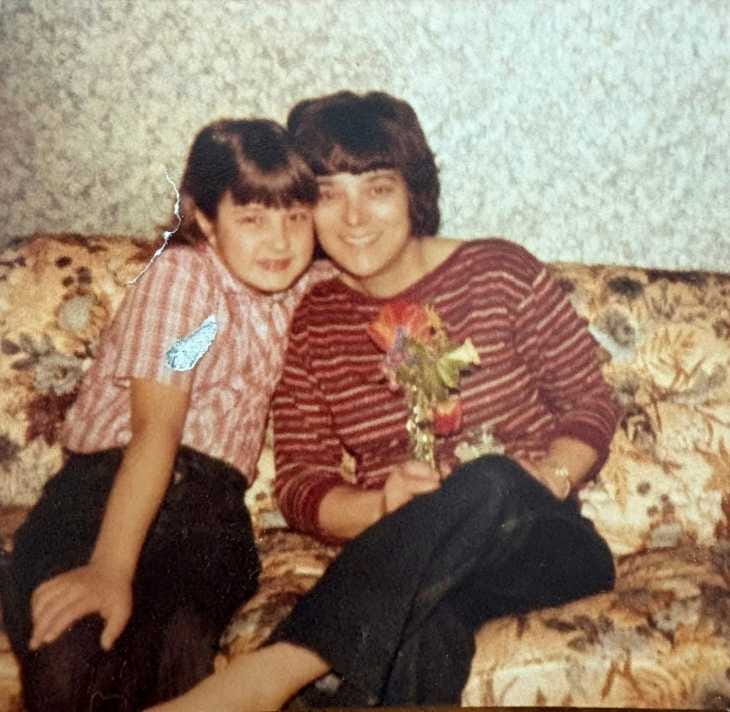
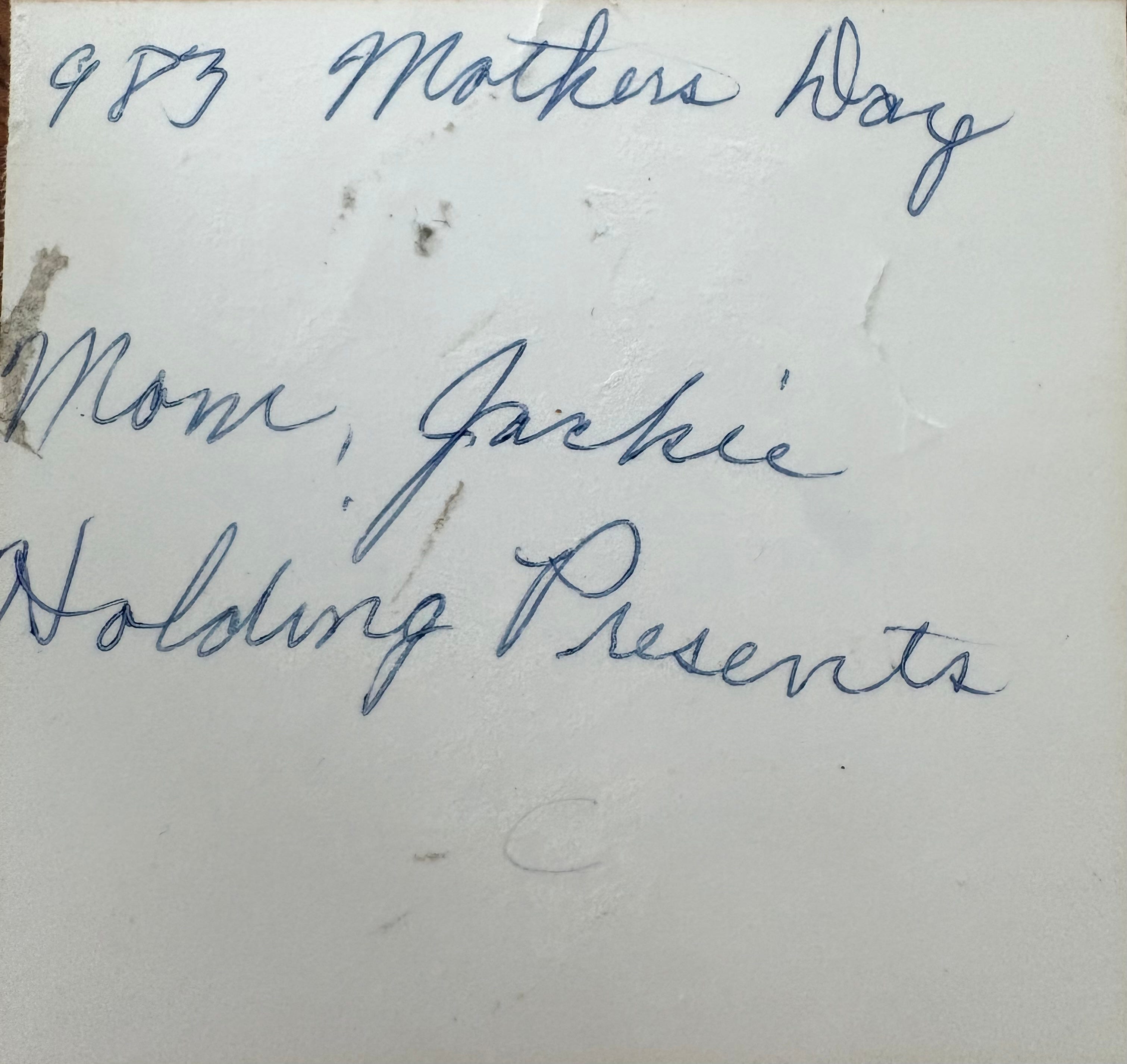
This is a photo of me and my mom on Mother’s Day, 1983. I always put it out on my altar every year around this time. I was so excited that she let me write the caption on the back of the photo. It felt very grown up. 😊
The presents were flowers my mom planted when we first moved into our family home in 1976 when I was 4. I remember her burying bulbs in the pre-existing beds scattered along the front and sides of the house and how she tended to the rose garden that ran the length of the backyard along the fence. Being 11 when this photo was taken, I did not have access to a savings account to purchase a real gift for my mom. Plus, money was super tight back then. This was the first Mother’s Day we spent together after my dad left. This cheery photo conveys the resilience we kindled over that past year, along with the flickers of hope for more healing and rebuilding to come.
That morning, I stood on a chair to grab from the high cupboard over the kitchen counter my grandmother’s bud vase that we inherited after she passed the year prior. “Don’t look!” I instructed my mom, as I went outside and wandered around our yard with a pair of shears, carefully choosing the flowers to assemble into a small bouquet. I always loved my mother’s flower gardens. So did she. Based on the expressions in this photo, I am pretty sure we both felt that this gift was priceless.
My mom died in 2010 from complications related to amyotrophic lateral sclerosis (ALS). She journeyed through a lot of other physical and emotional challenges throughout her life, which confined me in the role of caregiver from an early age.
This photo—and the memory it encases—is one I cherish the most in my collection. You can see this photo has been well-loved over the years. It preserves a moment in time that was pure, light, uncomplicated—a late morning in early May that was sunny and warm, the scent of Mom’s lilies of the valley wafting through the living room.
Just a simple, easeful moment between a mother and a daughter, before the complications of chronic illness inverted that relationship too soon, and for too long.
What I also love about this photo is our matching jeans. This was NOT intentional! My tween self would have died before dressing in matchy-match outfits with my mom. It’s hilarious to see how we are kinda twinning without realizing (or admitting) it. I always dug my mom’s aesthetic: little to no make-up, one thin gold necklace around her neck that she anointed with a kiss of musk, fringy oxfords with a bit of a heel, a blazer, and her beloved pants.
My mom loved pants of all kinds. I could count on one hand how many times I saw her in a skirt or dress. Recently, I saw a photo of her as a young girl—probably about 4 or 5—standing amid the gaggle of her 4 older siblings, all “properly” dressed in what seemed to be church clothes. There was my mom, with her dark hair in a pageboy cut, her dark eyes staring bigly at the camera, her porcelain skin smudged with a bit of dirt, wearing a pair of wrinkled linen pants and a half-untucked blouse with a round collar. Beth the baby, the tomboy; Liz, Lizzy, Elizabeth: she was called by many names. It wasn’t the abundance that made her fortunate: It was that each of them carried genuine fondness by those who used them.
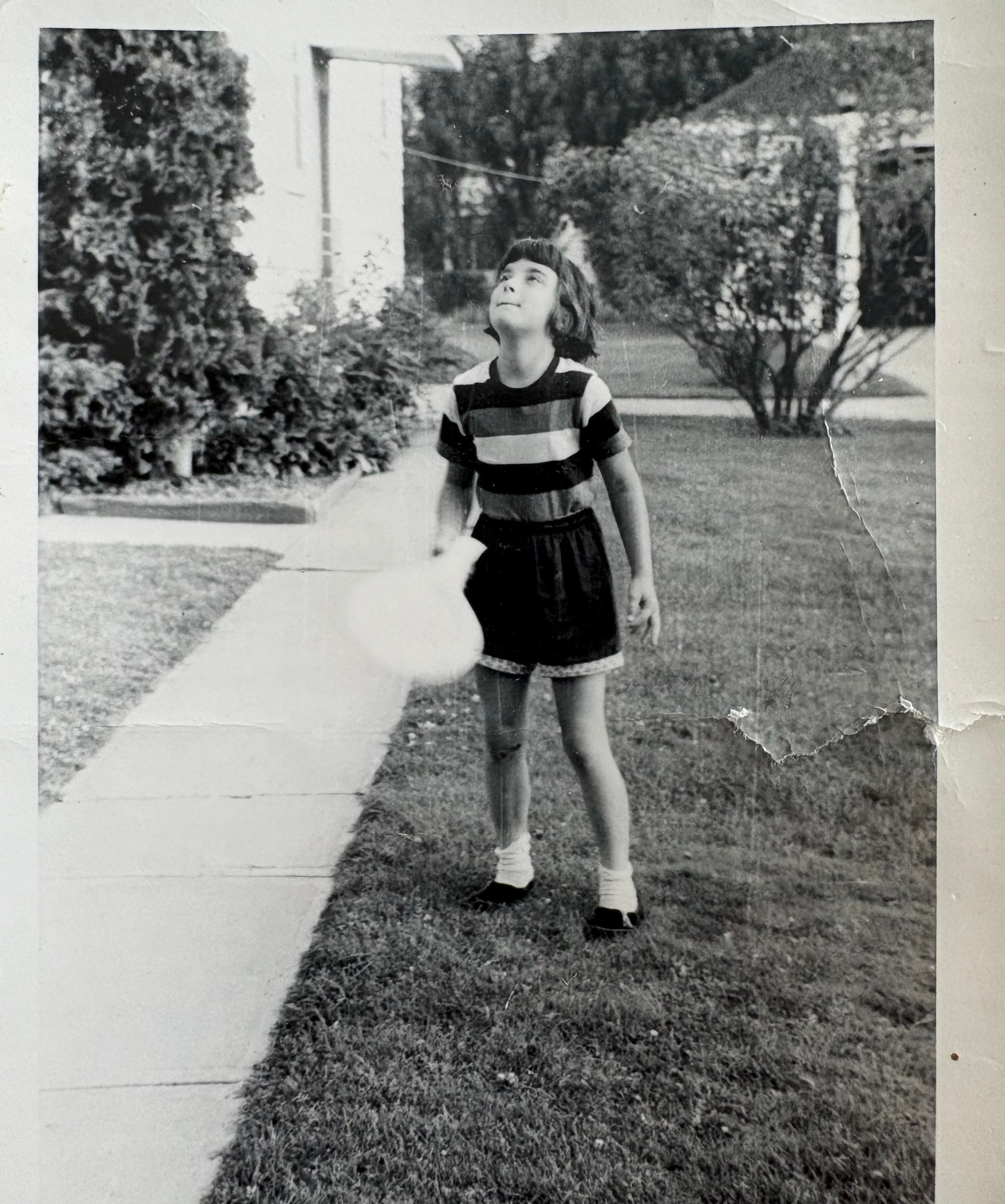
Some years are more griefy than others. This is one of those years. As I walk through this familiar porthole of mother loss today, my grief seems mycelial. It feels twisty today, this grief. I seemed to have let go of my mom’s hand as I meander along a fork in the path, opening a wider landscape of this terrain. As my gaze catches something in the distance, I feel Mom following behind me.
There are many others here with us—an infinite number of figures of all heights and widths, swaying in the breeze, outlined by a bronze sky lit afire by the sun. As I approach them, their forms become clearer.
There are fellow companions who walk this path of early mother loss.
There are those who wished to be mothers or parents and never saw their hopes, dreams, and longings come to light.
There are those of us who chose to not be mothers, enduring marginalization, judgment, loneliness, or fatigue around navigating our lives outside of dominant narratives.
Wisps of dandelions squall and settle atop the terrain, a thick dusting of sorrow for our Earth, whose treatment by humans correlates to the treatment of female bodies across Her entire surface.
A tinny smell stings my nostrils as grief arises for the mothers in Iran, Ukraine, and other war-torn countries who lose their lives or their children’s lives to bombs and violence driven by men who claim to “cherish” those who procreate (and their offspring—up to a certain age), but instead “cherish” sex trafficking rings run by other powerful men through agreed-upon silence, legal protection, and sharing in the spoils.
Knee-deep in mud, I wrestle with the sinkhole of archetypal motherlessness inflicting our culture, driving its beautifully chaotic soul into exile by rape academies researched by millions of every-day people, the moniker “Motherless” serving as the breadcrumb that helps them find their way to this decrepit doorstep.
As a non-mother, I grieve for the mothers—here and gone—as well as all women, queer, and nonbinary people whose gender/gender fluidity is a hazard, whether or not we birth babies.
I walk through a hot wave of holy outrage as patriarchy scoops out the insides of men and others it purports to raise up; it drags its jagged teeth across the soft, vulnerable spots of human bodies as if it was deseeding a cantelope—and then tosses the innards into a plastic garbage bag, denying them even the sweet release of becoming compost so that they feed nothing.
Suddenly, I am tired. I can hardly pick my feet up to move ahead. The heaviness of my heart grinds me down closer to the Earth. I am immobilized by gravity. My mother seems to have gone. I can’t find her; she is no longer following me.
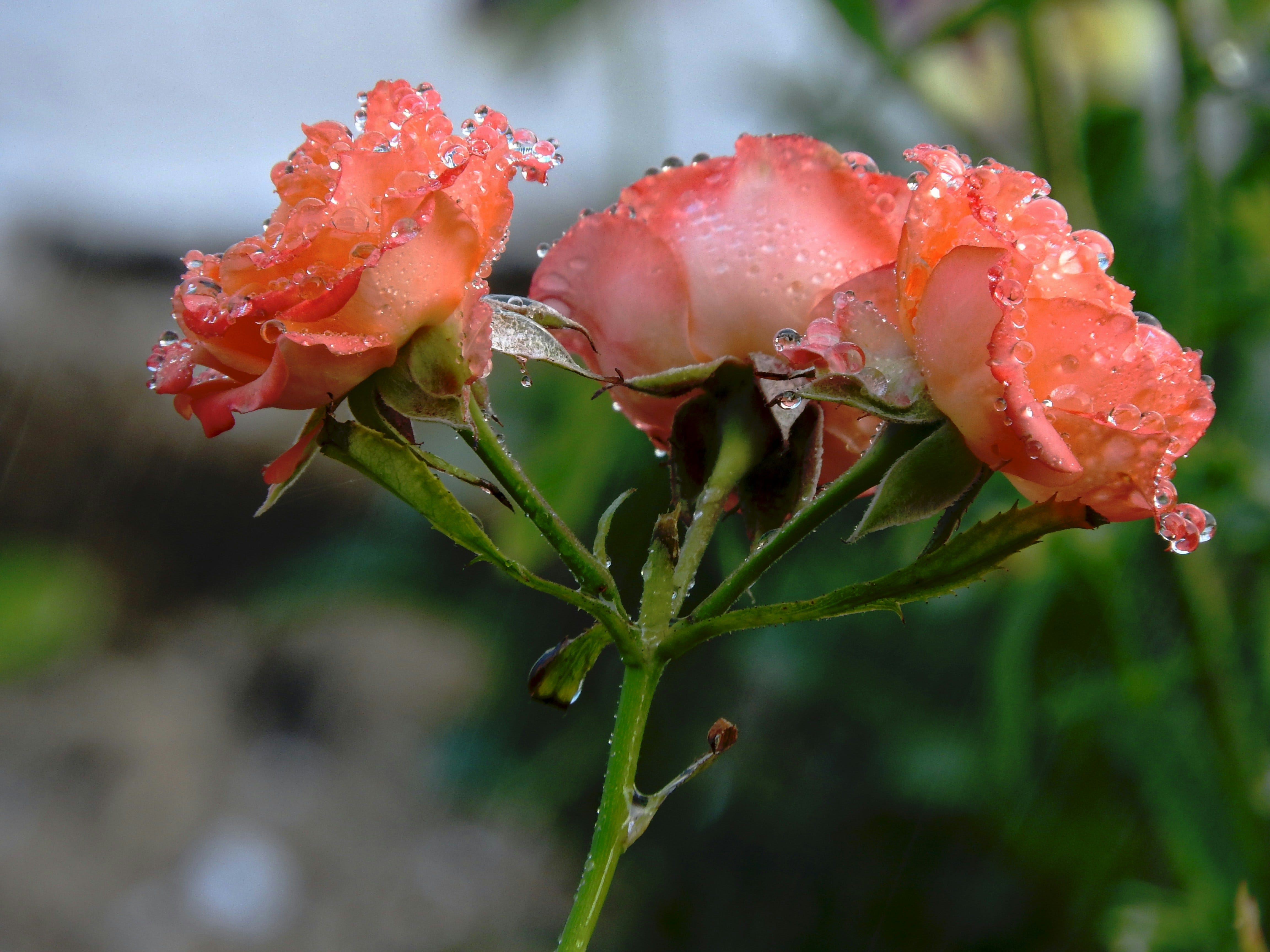
I look at this photo again from Mother’s Day 43 years ago. Along with the despair and rage weighing down my heart, I drink in our smiling faces and feel my own soften, my eyes dewy. I think of Mom’s flowers and once again allow my eyes to dart around as they look for her. Suddenly, I am immersed in a field of blossoming bushes, blooming shrubs, and dark-leafed plants bobbing with colorful flowers the size of my head!
How did I get here? Or was I here all along? Did Mom have something to do with this? Perhaps we all learn to be green thumbs like her once we pass on so we can till the soil for new growth. Wouldn’t that make sense? I stand in the middle of this bounty—trumpeting tulips, delicate daffodils, dainty lilies of the valley, lively purple irises, intoxicating lavender lilacs, every color and blossom imaginable, as far as the eye can see. I turn slowly to take in the wonder, allowing my hands to gently brush the leaves and blooms all around me. My fingertips encounter something warmer and firmer—my mother’s hand. Grasping for it, our fingers entwine again and, for some reason I cannot explain with words, I know I never have to feel alone.
What does it mean that our griefs can transform into a fecund garden of flowers? How does this happen? Who may we encounter there? I may not have the answers, but being here with Mom among the flowers, the dew collecting in my eyes can water this vast garden, and for some reason that feels like enough, if just for today.